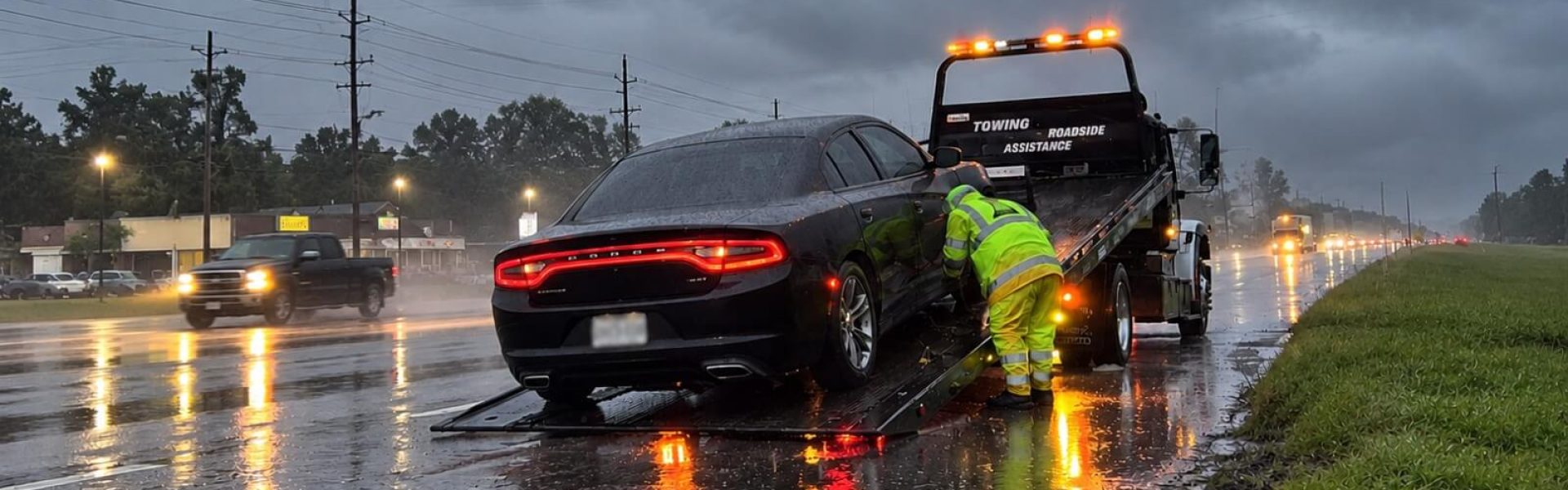
Tips for Towing During Bad Weather
Bad Weather can make towing much more difficult and dangerous. Heavy rain, strong winds, snow, ice and poor visibility can crate serious hazards for both the tow truck operator and the vehicle being transported.
Whether you are towng a disabled vehicle or waiting for roadside assistance, taking the right precautions can help prevent additional damage and keep everyone safer on the road.
1. Check the Weather Before Starting
Before towing a vehicle, check current weather conditions and the forecast for your route. Sever thunderstorms, flooding, snow, ice and high winds can make certain roads unsafe.
If conditions are dangerous, consider delaying the trip when possible. When a vehicle needs to be moved during sever weather, choose the safest available route rather than simply the fastest one.
2. Make Sure the Vehicle is Properly Secured
Bad Weather can increase the stress placed on a vehicle is properly positioned and secures to the tow truck.
Tow straps, chains, wheel lifts, safety chains and other equipment should be inspected and attached correctly. A professional tow truck operator should also make sure the vehicle is stable before leaving the location.
3. Reduced Your Speed
Wet, snowy or icy roads can significantly reduce traction. Strong winds can also affect the handling of a tow truck, specially when transporting a larger vehicle.
Driving at a safe speed gives the driver more time to react to changing road conditions, traffic, debris and sudden weather-related hazards.
4. Increase Following Distance
A loaded tow truck needs enough space to stop safely. Poor weather can make stopping distances even longer.
Leave extra space between the tow truck and other vehicles. Avoid sudden braking and unnecessary lane changes, particularly when roads are wet, icy or covered with standing water.
5. Use Your Lights Properly
Visibility can drop quickly during heavy rain, fog, snow and storms. Make sure the tow truck’s headlights, brake lights and other required lighting are working properly.
When visibility is poor, use the appropriate lights for the conditions and remain alert for vehicles that may be difficult to see.
6. Watch for Flooded Roads
Heavy rainfall can cause flooding in low-lying areas. Even water that appears shallow can hide potholes, damaged pavement or other hazards.
Never assume a flooded road is safe simply because another vehicle has passed through it. If possible, take an alternate route and avoid driving through water when the depth or road condition cannot be determined.
7. Be Careful Around Ice and Snow
Winter weather creates additional challenges for towing. Ice can make ramps, loading areas, bridges and roads extremely slippery.
Before loading a vehicle, ispect the area for ice and snow. Clear slippery surfaces when possible and use appropriate equipment and procedures to maintain control of the vehicle during loading and unloading.
8. Watch for Wind and falling debris
Strong winds can create hazards such as fallen branches, branches, damaged signs, loose objects and downed power lines.
A tow truck carrying a vehicle can also be more affected by strong crosswinds. Stay alert, maintain control of the truck and avoid areas where debris or other hazards make travel unsfae.
9. Protect the Disabled Vehicle
Bad Weather can cause additional problems for a vehicle that is already disabled. Rain, snow, mud and standing water can affect the vehicle while it is waiting to be transported.
When appropriate, use proper towing equipment and procedures to protect the vehicle during loading and transportation. Professional towing services can determine the safest way to move different types of vehicles based on their condition and the weather.
10. Stay Visible During a Roadside Emergency
If your vehicle breaks down during bad weather, your first priority should be personal safety. If possible, move to a safe location away from moving traffic and turn on your hazard lights.
Do not stand directly behind or in front of the disabled vehicle while waiting for a tow truck. If conditions become dangerous, remain inside the vehicle with your seat belt fastened when it is safer to do so.
Why Safe Towing Matters During Bad Weather
Bad weather can turn an ordinary towing job into a challenging situation. Rain, snow, ice, wind, flooding and reduced visibility can affect vehicle control, stopping distances, equipment handling and overall road safety.
Taking time to assess conditions, properly secure the vehicle, reduce speed and use the right towing equipment can help reduce unnecessary risks.
If your vehicle breaks down during sever weather, avoid putting yourself in danger trying to move it yourself. A reliable local towing and roadside assistance company can help transport your vehicle safely and get you back on the road when conditions allow.
Final Thoughts
Towing during bad weather requires extra preparation and caution. From checking the forecast to securing the vehicle and adjusting driving speed, every step matters when road conditions become unpredictable.
If you need towing or roadside assistance during rain, snow, storms or other difficult weather conditions, contact a professional towing company for help. Getting the right assistance can protect your vehicle and most importantly, help keep you safe.
Need Towing or Roadside Assistance?
Do not stay strandedn longer than necessarry. If your vehicle breaks down or you need emergency roaadside assistance in Tallulah, LA contact Max Apogee Towing and Roadside.
Max Apogee Towing and Roadside
Tallulah, LA
Phone: (318) 935-6153
Call today and tell us what kind of towing or roadside assistance you need.